
Arkansas is best known for its scenic lakes, rivers, and hot springs, but it’s also home to the only active diamond mine in the U.S. How’s that for fancy? Arkansas’ climate is classified as humid subtropical, but the Natural State experiences four seasons with plenty of precipitation and short, cold winters.
Arkansas has plenty of prime outdoor months for the avid adventurer with high temperatures averaging 74 degrees Fahrenheit and lows averaging 50 degrees Fahrenheit. The six best grass types for Arkansas need little water to survive the unique climate. Read on to discover varieties suitable for your Arkansas landscape.
- Warm-Season vs. Cool-Season Grasses for Arkansas
- Best Warm-Season and Cool-Season Grass Types for Arkansas
Warm-Season vs. Cool-Season Grasses for Arkansas
Arkansas sits in the transition zone, a region ranging from East Coast states like Delaware, Maryland, and North Carolina all the way west to Missouri, Kansas, Eastern Oklahoma, and Arkansas. This zone has incredibly unique weather, and neither warm nor cool-season turfgrasses completely adapt to the region.
In the transition zone, summers are too hot for cool-season grass varieties and winters are too cold for warm-season grasses, making it incredibly difficult to maintain your lawn.
All types of grass are classified into one of two categories:
- Warm-season grasses perform best in the southern half of the United States. They grow most actively in late spring and summer when temperatures are around 75 to 95 degrees Fahrenheit.
- Cool-season grasses are well-suited to northern climates with cold winters and distinct seasons. They grow most actively in early spring and fall when temperatures are around 55 to 75 degrees Fahrenheit.
Arkansas is a landlocked state just south of its transition zone neighbor, Missouri. Cool-season grass varieties grow best in Northern and Central Arkansas, while the entire state is suited to growing most warm-season cultivars.
Best Warm-Season and Cool-Season Grass Types for Arkansas
The following grass types adapt to the climatic and soil conditions of Northern Arkansas:
1. Bermudagrass
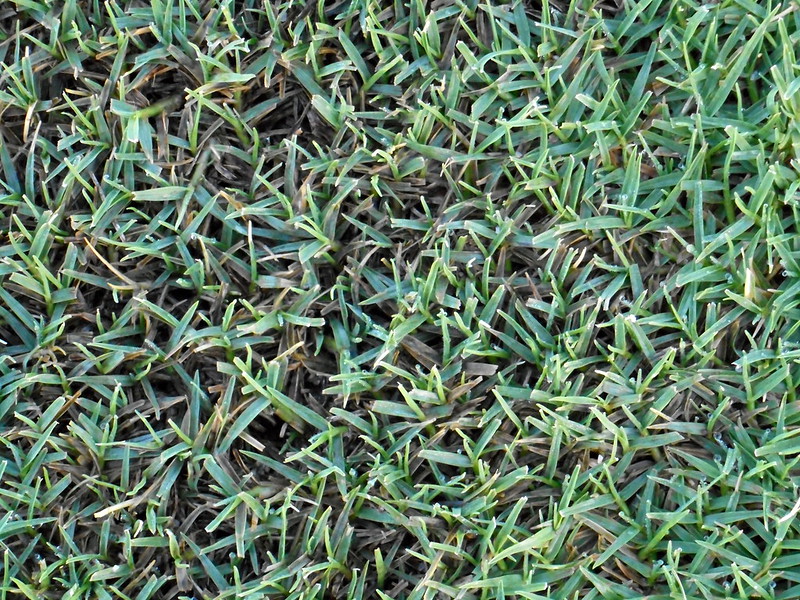
Photo Credit: Scot Nelson / Flickr / CC0 1.0
Like some warm-season cultivars, bermudagrass adapts to the entire state. It is the most common Arkansas grass variety and a versatile option suited for many applications, including athletic fields, golf courses, and home lawns. Bermudagrass is moderately cold-tolerant, hardy, and fine to coarse-textured. It is an aggressive grass that recovers quickly, withstanding drought and heavy foot traffic.
Common and hybrid bermudagrass varieties grow well in Arkansas. Common varieties are sun-loving with a light green color and coarse texture, while hybrid cultivars have a finer texture and dark green appearance. Common bermudagrass requires less maintenance than hybrid varieties but is less dense with a more sparse appearance and lower disease resistance.
Classification: Warm-season grass
Spreads by: Stolons and rhizomes
Shade tolerance: Poor — needs full sun
Drought resistance: High
Foot traffic tolerance: High
Maintenance needs: Needs frequent mowing due to fast growth rate; develops thatch easily; needs regular fertilization
Mowing height: 1-2 inches
Potential for disease: Good resistance to disease; prone to spring dead spot, dollar spot, leaf spot, large patch, and sheath spot
Potential for pests: Low resistance; prone to white grubs, hunting billbugs, mole crickets, armyworms, and sod webworms
Soil pH: 6-6.5
Soil type: Tolerates most soil types
Other notes: Bermuda spreads aggressively via its stolons (above-ground stems) and rhizomes (below-ground stems) and can out-compete many weeds. The downside is that it also can be a nuisance and is sometimes considered invasive. You’ll often find it has tunneled underground into flower beds and spread into neighboring lawns.
2. St. Augustinegrass
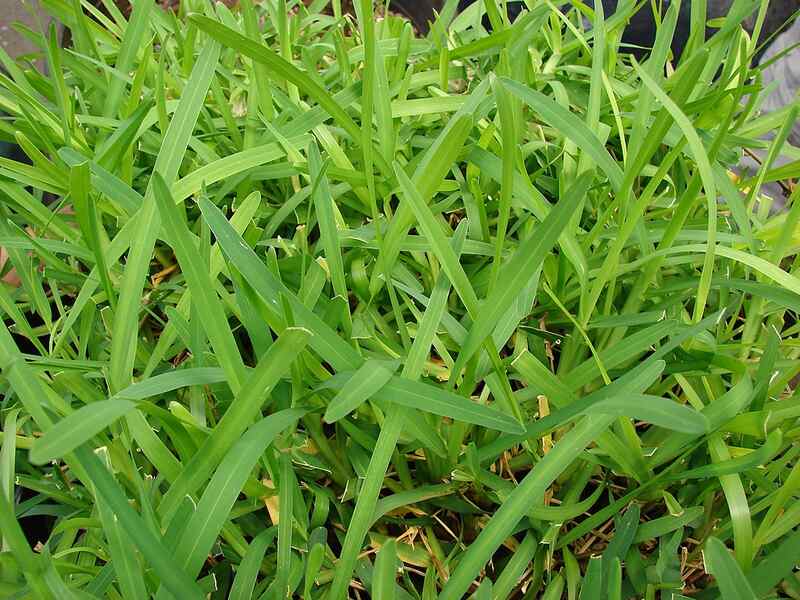
Photo Credit: Forest & Kim Starr / Wikimedia Commons / CC BY 3.0 US
St. Augustinegrass is hardy as far north as Little Rock and thrives in Arkansas’ hot summers. It is a dense turfgrass with deep roots. However, it is the least winter-hardy warm-season cultivar. St. Augustinegrass has a high shade tolerance and is easy to establish. It is quick-growing but does not stand up well to herbicides or heavy traffic.
All cultivars of this dense turfgrass are susceptible to disease and pests, especially chinch bugs. St. Augustinegrass is blue-green with a coarse, carpet-like texture. The most readily available Arkansas cultivar is the common St. Augustinegrass.
Classification: Warm-season grass
Spreads by: Stolons
Shade tolerance: Moderate shade tolerance, among the highest of any warm-season grass; some cultivars are more shade tolerant than others
Drought resistance: Moderate
Foot traffic tolerance: Moderate
Maintenance needs: Moderate to high mowing frequency
Mowing height: 2.5-4 inches (mow dwarf varieties from 2.5-3 inches; standard cultivars from 3-4 inches; mow tall in shade)
Potential for disease: Moderate to high; prone to gray leaf spot, large patch, and take-all root rot
Potential for pests: High; prone to chinch bugs, cutworms, mole crickets, grass loopers, armyworms, webworms, and grubs
Soil pH: 6-7.5
Soil type: Tolerates many soil types; prefers moderately fertile and moist (not waterlogged) soils; not a highly drought-tolerant grass; doesn’t tolerate soil compaction
Other notes: Native to coastal areas across the world and prefers moist soils and mild winters; will thrive in more inland areas provided growing conditions are met; good salt tolerance; will go dormant during winter in all but the southernmost regions
3. Zoysiagrass
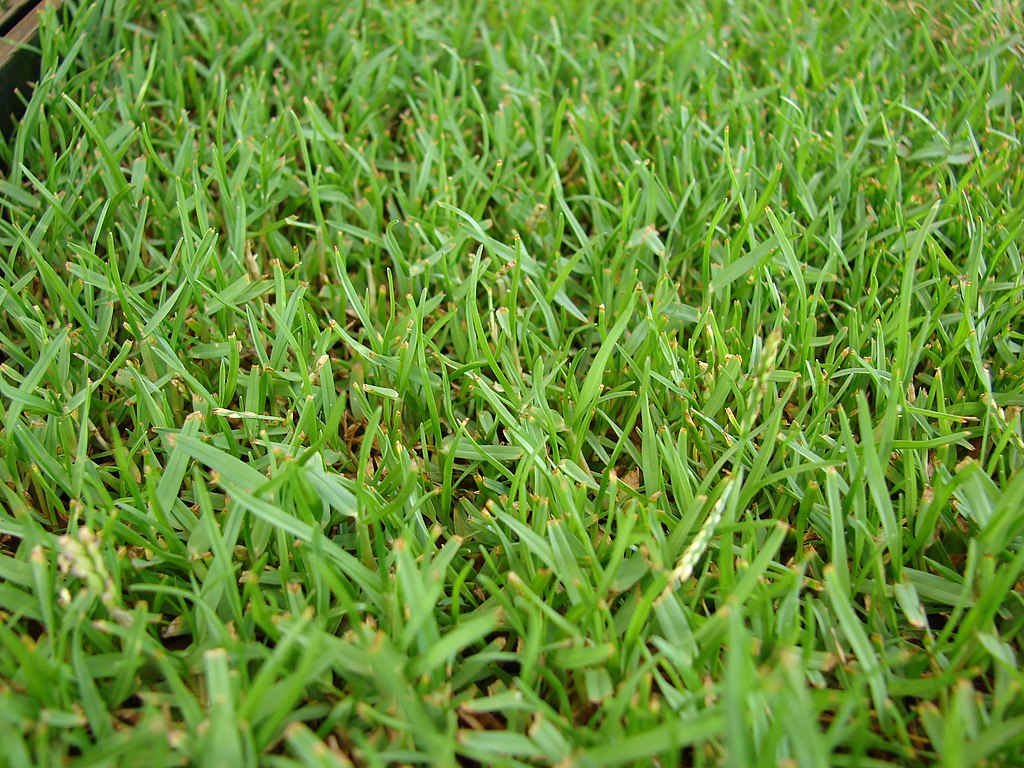
Photo Credit: Forest & Kim Starr / Wikimedia Commons / CC BY 3.0 US
Like bermudagrass, Zoysiagrass grows throughout Arkansas. It has thick, stiff leaf blades and grows dense, blocking out weeds. The low-maintenance turfgrass requires little fertilization and tolerates drought, shade, heavy traffic, low mow heights, and low temperatures.
Arkansas is home to two main cultivars of Zoysiagrass, Zoysia japonica and Zoysia matrella. The attractive turfgrass is recognizable for its dense appearance and dark green color. Arkansas cultivars are not prone to disease or insect infestation, but grow slowly.
Classification: Warm-season grass
Spreads by: Stolons and rhizomes
Shade tolerance: Tolerates light to moderate shade
Drought resistance: High
Foot traffic tolerance: High
Maintenance needs: Low to moderate nitrogen requirement; moderate mowing frequency
Mowing height: 1-2.5 inches
Potential for disease: Low; large patch, root decline, spring dead spot, rust, curvularia, and leaf spot can occur
Potential for pests: Low; most common pests are mites, grubs, mole crickets, hunting billbugs, armyworms, chinch bugs, and sod webworms
Soil pH: 6-6.5
Soil type: Well-draining, some cultivars more tolerant of a wide range of soils than others
Other notes: Moderately salt tolerant; cut with sharp mower blade; mow taller if grass is in partial shade
4. Centipedegrass
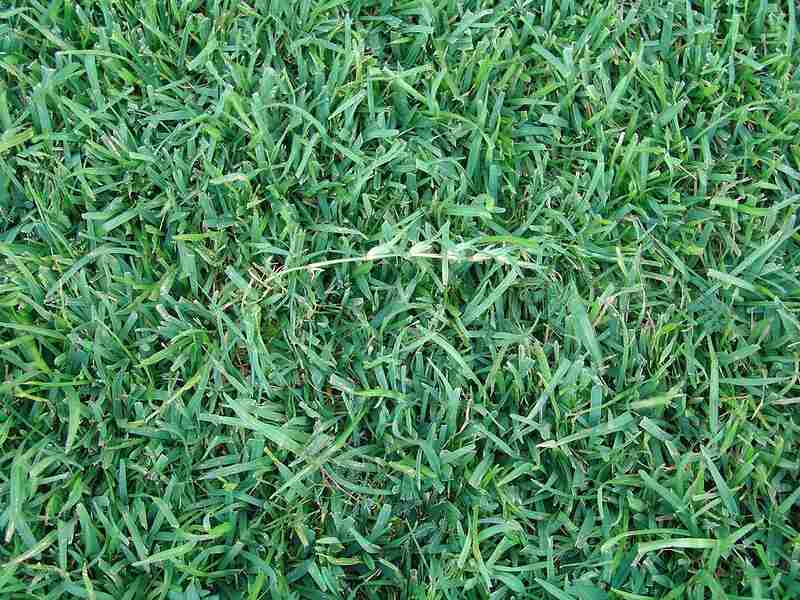
Photo Credit: James Becwar / Wikimedia Commons / CC0
Centipedegrass is slow-growing and a great low-maintenance option for Southern and Central Arkansas lawns. Like St. Augustinegrass, centipedegrass cultivars are hardy as far north as Little Rock, requiring little mowing, fertilization, or water to remain lush and green.
Centipedegrass handles shade better than bermudagrass, but the smooth, flat blades do not handle heavy traffic, cold, or herbicides well. The turfgrass has a pronounced medium texture and light green color. It prefers to be left alone and is prone to pests and disease when improperly maintained or over watered.
Classification: Warm-season grass
Spreads by: Stolons
Shade tolerance: Moderate — at least six hours of full sun per day
Drought resistance: Low to moderate
Foot traffic tolerance: Low
Maintenance needs: Low mowing frequency
Mowing height: 1.5-2 inches
Potential for disease: Moderate; prone to centipedegrass decline and iron chlorosis
Potential for pests: Moderate; prone to ground pearl insects, grubs, mole crickets, sod webworms, and lawn caterpillars
Soil pH: 5-6
Soil type: Acidic, infertile, at least moderately good drainage (very dense, clay soils produce poor results)
Other notes: Low maintenance once established; greenish-yellow color (like a green apple) during the growing season; low fertilizer and mowing requirements; not a salt-tolerant grass
5. Tall Fescue
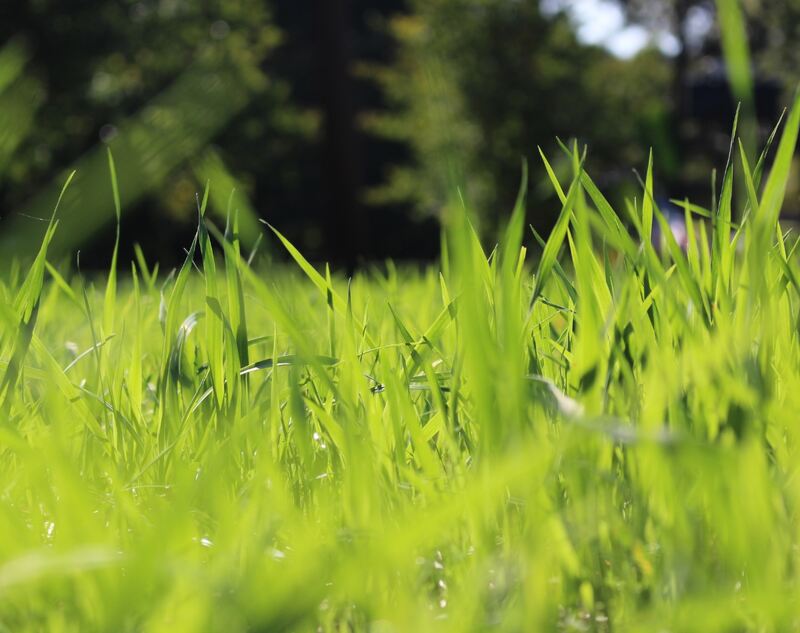
Photo Credit: Billy Lau / Canva Pro / License
Tall fescue grows best in the northern one-third of the state but will grow as far south as Central Arkansas. It is shade and cold-tolerant, growing best in spring and fall, and most cultivars go dormant in the hot Arkansas summers. Tall fescue has a clumping growth habit with deep roots and a sparse appearance.
The turfgrass has an attractive medium to dark green color and coarse texture. It requires regular watering, fertilization, and mowing. Tall fescue stands up to heavy foot traffic and grows well in a range of soils, including clay and sand. Cultivars are not the most attractive choices for home lawns. However, homeowners appreciate their climatic adaptability, especially in the tough transition zone.
Classification: Cool-season grass
Spreads by: Tillers (Bunch forming)
Shade tolerance: Moderate to high
Drought tolerance: Moderate
Foot traffic tolerance: Moderate – doesn’t recover easily from wear
Maintenance needs: Moderate
Recommended mowing height: 2-4 inches (Check your cultivar and state recommendations, as many tall fescue lawns grow best when they’re mowed on the tall side.)
Potential for disease: Low to moderate resistance – can be prone to leaf spot, seedling disease, and brown patch
Potential for pests: Low to Moderate resistance – can be susceptible to armyworms, cutworms, sod webworms, and grubs
Soil pH: 5.5-6.5
Soil type: Grows in most soil types but prefers clay soils
Other notes: For optimal results, apply fertilizer once during the months of September and November. Also, plant fresh grass seeds every couple of years if you wish to maintain a lush lawn and tackle any sparse or thinning spots.
6. Kentucky Bluegrass
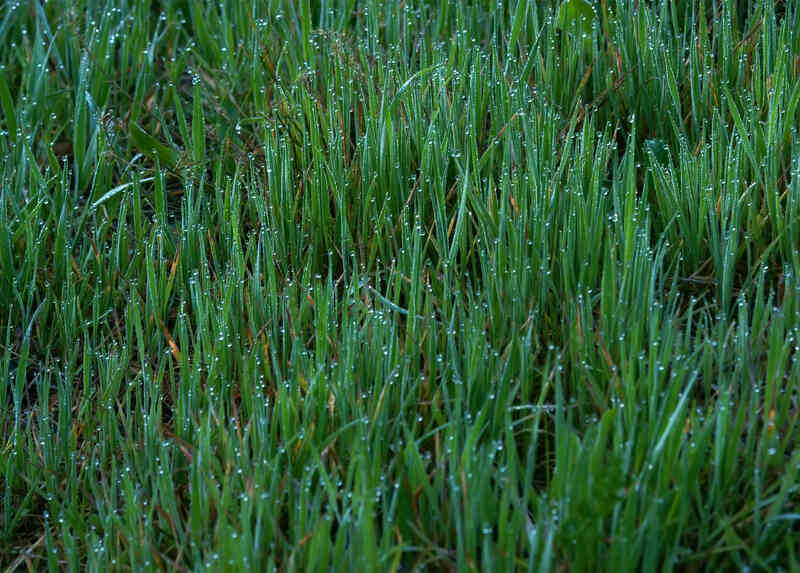
Photo Credit: Ferran Pestaña / Flickr / CC BY-SA 2.0
Kentucky bluegrass is a high-maintenance, cool-season cultivar that only grows in Northern Arkansas when mixed with tall fescue. It has low drought tolerance but withstands cold and the winter conditions of Arkansas well. To survive the hot, dry Arkansas summers, Kentucky bluegrass cultivars must be mixed and seeded with tall fescue.
Kentucky bluegrass is recognizable for its famed blue-green color, fine texture, and dense appearance. Hybrid cultivars have improved heat tolerance and include Durablue, Thermal Blue Blade, and Solar Green. While these varieties withstand hot temperatures better, they still grow best alongside tall fescue.
Most varieties are available as premixed seeds. The most common pre-mixed ratio for Arkansas is 90% tall fescue seed and 10% hybrid bluegrass seed. This ratio ensures a more dense appearance that is hardy to the drought needs of a Northern Arkansas summer.
Classification: Cool-season grass
Spreads by: Rhizomes
Shade tolerance: Low to moderate – prefers full sun
Drought tolerance: Moderate
Foot traffic tolerance: Low to moderate, but recuperates well
Maintenance needs: Moderate
Recommended mowing height: 2-3 inches – mow taller during summer
Potential for disease: Moderate to high – can be prone to snow molds, summer patch, leaf spot, fairy rings, dollar spot, necrotic ring spot, chinch bugs, bluegrass billbugs, grubs, and greenbugs
Soil pH: 6-7
Soil type: Well-drained, fertile soils
Other notes: It’s most often mixed with other species, such as tall fescue, in home lawns. Due to its limited root depth, regular watering is necessary. Poor soil conditions and lack of water can cause diseases, but newer cultivars are generally hardier and more resistant to disease.
FAQ About Arkansas Grass Types
No. While some homeowners overseed their warm-season grass with perennial ryegrass to maintain a year-round green lawn, it is not recommended for healthy warm-season turfgrass. The ryegrass slows spring green-up, competing with your warm-season turfgrass and stealing vital nutrients.
It is best to allow your warm-season grass to enter natural dormancy during the cold winter months. Warm-season Arkansas turfgrasses include Zoysiagrass, bermudagrass, centipedegrass, and St. Augustinegrass.
If you live south of Little Rock, plant your warm-season grass seed in May or June. This gives the seed plenty of time to germinate before the hot summer. For residents of Northern Arkansas, sow your cool-season cultivar in September or October to complement the natural fall growth cycle.
Perennial ryegrass is a temporary turfgrass option for Arkansas. It is often used after new construction or lawn renovation to prevent erosion and reduce dust and mud. Like other cool-season cultivars, sow perennial ryegrass in September or October. The temporary turfgrass will green up quickly and last through spring before your warm-season cultivar takes over.
Choose Plant and Grass Varieties for Your Arkansas Landscape
The best grass cultivars for Arkansas depend on where you live in the state. Varieties are suited to your unique USDA zone. Arkansas’ zones include 6b to 8a, with most of the state falling between 7b to 8a. All turfgrasses have their own characteristics and needs. Choose a variety that works well for your space and lifestyle.
Your grass comes together to help form your complete landscape. There are numerous landscaping options for the Natural State, and you can take advantage of the state’s four unique seasons. Be sure to check out our guides to help you plan your landscape and keep your lawn healthy year-round:
- Best Native Plants for Arkansas
- Low-Maintenance Landscaping Ideas for Arkansas
From well-known cities like Fayetteville, Little Rock, and Bentonville to the resort destinations of Hot Springs, no matter which part of the state you live in, conquer Arkansas’ unique climate. Let Wikilawn connect you with a local lawn care pro today to help you maintain a green and healthy lawn, so you have more free time outdoors.
Main Image Credit: Lawn, Arkansas / Pxhere
